
When engineers and procurement teams evaluate a metal 3D printing supplier, they typically focus on materials, tolerances, and lead times. However, the machine behind those specifications matters just as much. The hardware determines what is actually possible — in terms of part density, dimensional accuracy, build volume, and production consistency. At Hyperlab3D, we have standardized our entire metal printing operation on one platform: the ZRapid iSLM series. It is developed by ZRapid Tech (中瑞科技), one of China’s most established additive manufacturing equipment manufacturers. Today, we operate 150 ZRapid iSLM machines across six model variants. This article explains why, and what that means for the parts we produce.
Who Is ZRapid Tech?
ZRapid Tech, known in Chinese as 中瑞科技 (ZRapid International), has been developing additive manufacturing systems since 1998. It produces a comprehensive range of industrial 3D printing platforms, including SLA, SLS, and SLM systems.
The iSLM series represents ZRapid’s flagship line of metal Selective Laser Melting (SLM) systems. These machines use high-energy fiber lasers and high-speed galvanometer scanners to fuse metal powder layer by layer under an inert gas atmosphere. The result is fully dense, high-strength metal parts produced directly from digital files. Furthermore, ZRapid designs, manufactures, and supplies its own software, materials, and machines as an integrated package. This simplifies process validation and reduces compatibility risk across a production fleet.
What SLM Actually Does
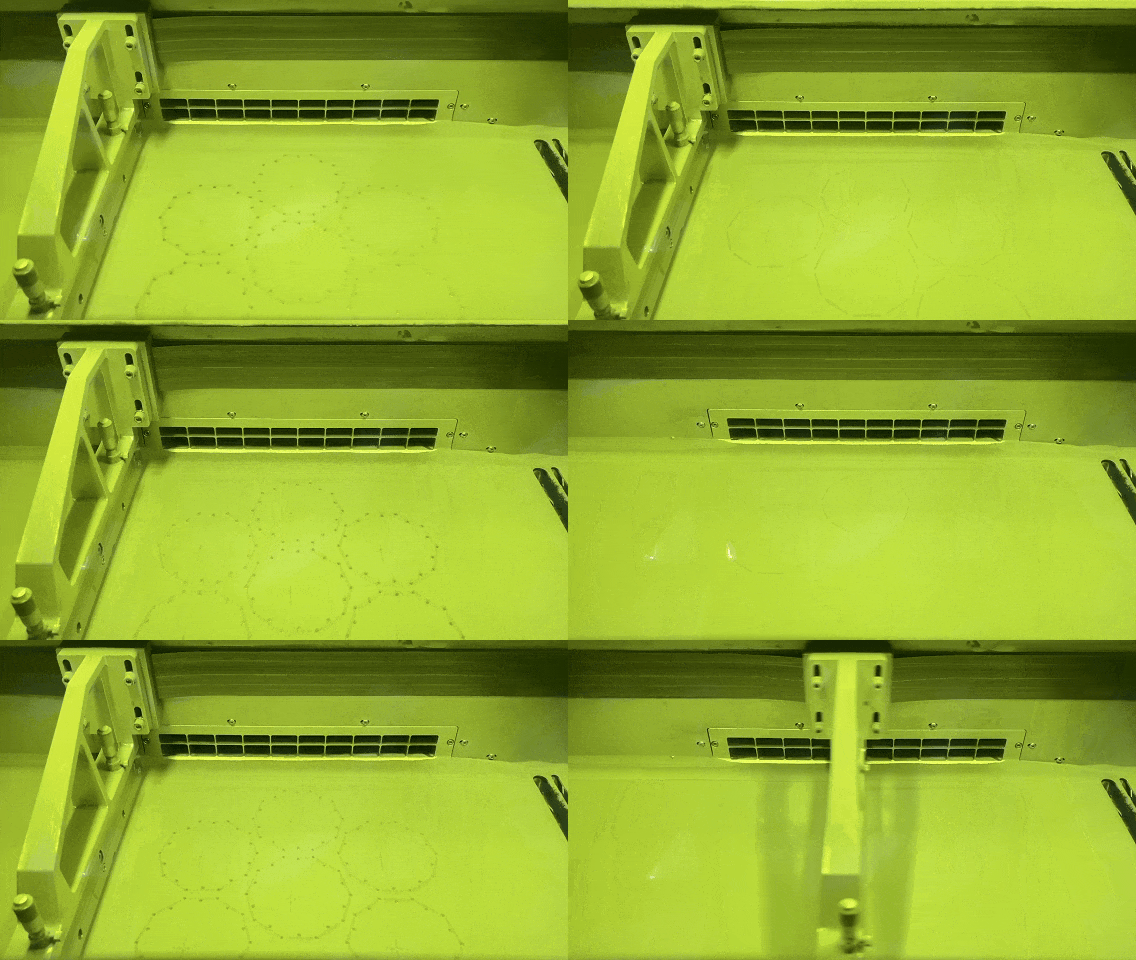
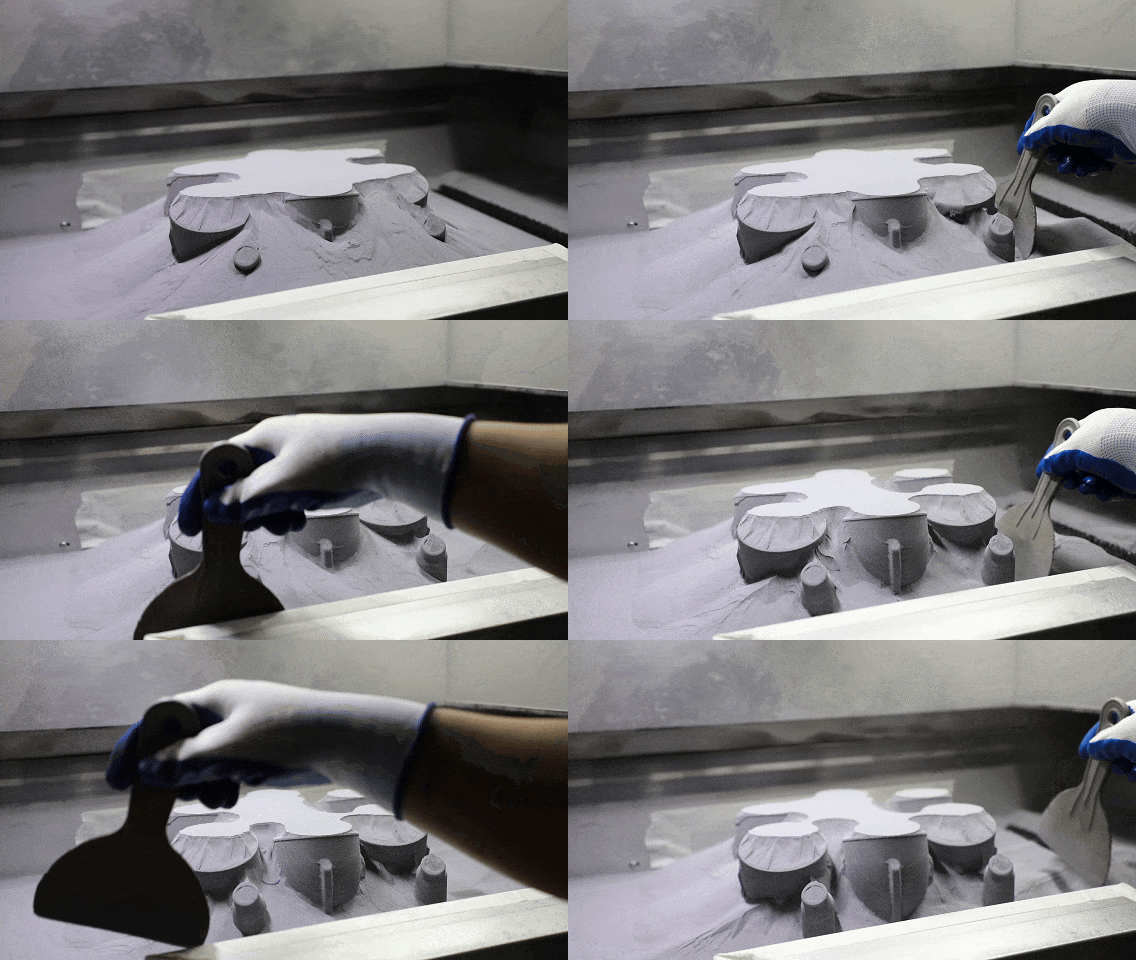
Selective Laser Melting is a powder bed fusion process in which a precision scraper deposits a thin layer of metal powder across a build platform. A high-power fiber laser then selectively melts the powder according to the cross-section of the part at that layer. The platform drops by one layer thickness, a fresh layer of powder is applied, and the process repeats until the part is complete. The entire build chamber operates under a nitrogen or argon atmosphere to prevent oxidation at high temperatures.
The result is a fully dense metal part — not a sintered approximation, but a true melt-and-solidify metallurgical structure. ZRapid iSLM machines achieve part density above 99%. Mechanical properties are comparable to — and in some cases superior to — conventionally manufactured equivalents. This is particularly important for load-bearing structural components, fluid-handling parts, and precision tooling where material integrity is non-negotiable.
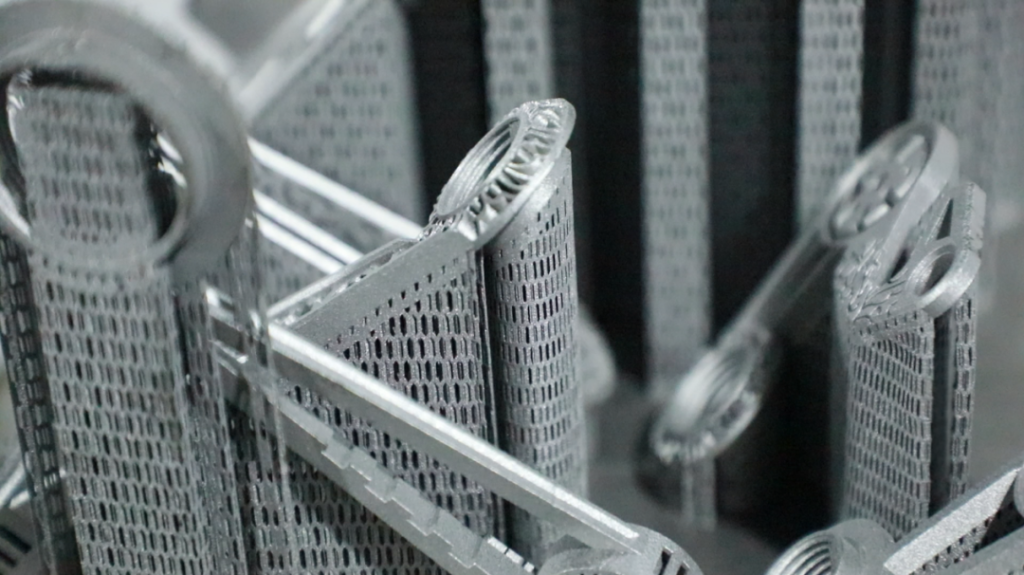
Additionally, the layer-by-layer process enables geometric freedom that no subtractive process can match. Internal cooling channels, lattice-filled structures, undercuts, and complex organic geometries can all be produced in a single build without tooling or fixturing.
ZRapid at Hyperlab3D: Six Models, One Platform
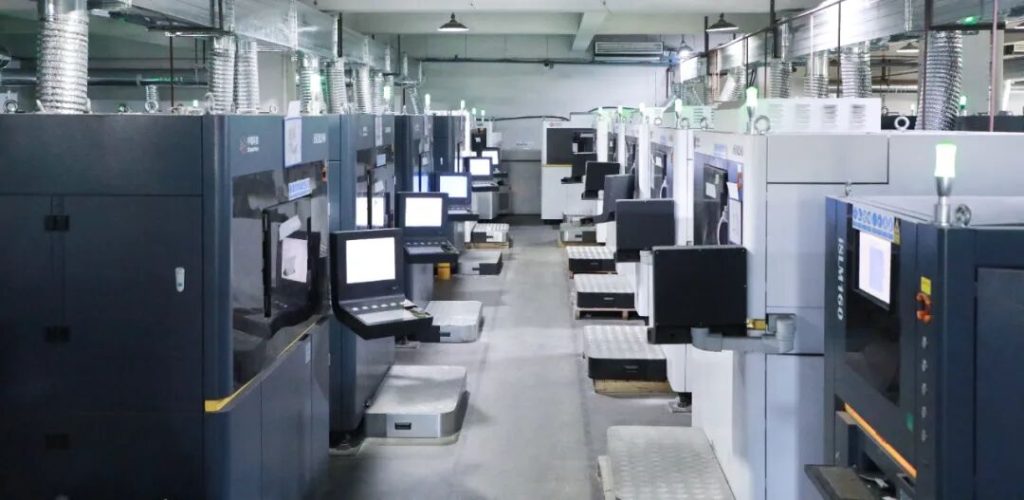
At Hyperlab3D, we operate six iSLM model variants, spanning build volumes from compact precision machines to large-format industrial systems. Rather than committing to a single machine size, this fleet structure allows us to match each order to the most appropriate build volume and laser configuration. This minimizes cost, maximizes throughput, and ensures the right process parameters for every part geometry.
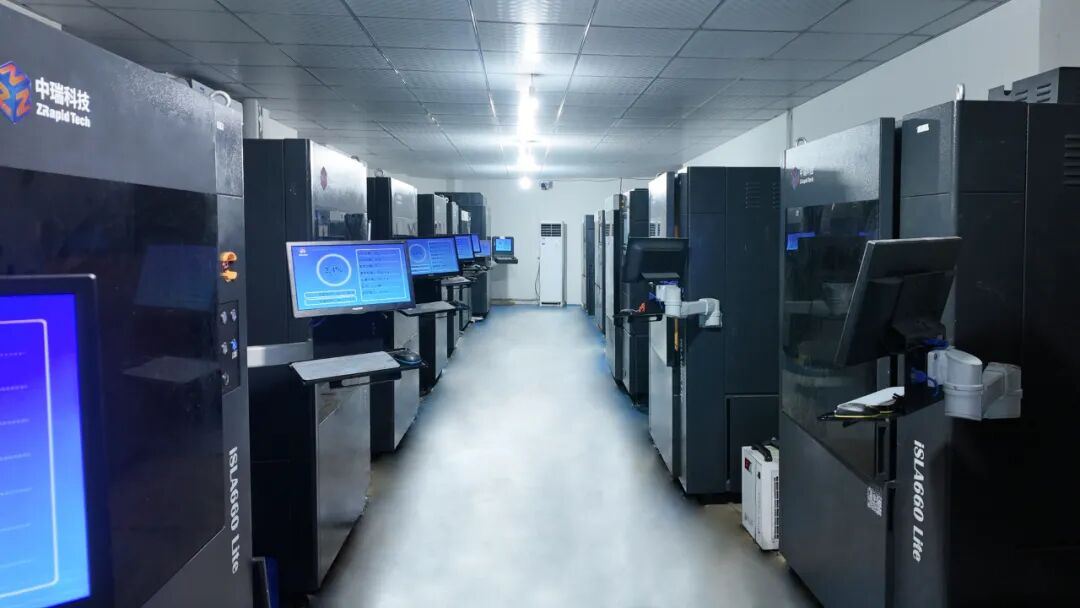
All six models share the same core iSLM control software (Presto SLM), the same 3dLayer preprocessing software, and the same material parameter libraries. As a result, process knowledge transfers directly across the fleet. A parameter set validated on one machine applies consistently across all machines of the same model. Workflows developed for one build volume scale predictably to another.
Key technical specifications across the fleet include:
Laser system: 1064 nm wavelength fiber lasers, with individual laser powers of 200 W to 1000 W depending on the model. Configurations range from single-laser to multi-laser setups. Higher-end models support dual or quad laser arrangements for increased throughput on large builds.
Beam spot size: 0.04–0.20 mm depending on the model, enabling the fine detail resolution required for thin walls, small features, and high-precision surfaces.
Layer thickness: Standard operation runs at 0.05 mm. A precision mode goes down to 0.02 mm for demanding applications. A fast mode reaches up to 0.15 mm where throughput takes priority.
Scanning speed: Up to 4.0 m/s during part scanning, with jump speeds up to 10.0 m/s, enabling efficient high-quality builds across a wide range of part geometries.
Build atmosphere: Nitrogen and argon gas protection with intelligent flow control (0–5 L/min). This ensures a consistent inert atmosphere throughout the build — critical for reactive metals such as titanium and aluminum alloys.
Software: iSLM control software (Presto SLM) with real-time quality monitoring, 24-hour unattended operation capability, and dual modes for quality and speed. The 3dLayer preprocessing software handles slicing, support generation, and nesting.
Materials: What We Can Print
Across the iSLM fleet, Hyperlab3D supports the full range of metal powders compatible with the ZRapid platform. Each material brings distinct mechanical and functional characteristics:
316L Stainless Steel is the workhorse material for general industrial applications — corrosion-resistant, weldable, and food-grade compatible. It is well suited for enclosures, brackets, fluid manifolds, and medical device components.
AlSi10Mg Aluminum Alloy offers an excellent strength-to-weight ratio. It is commonly used for lightweight structural components, heat exchangers, and aerospace brackets where mass reduction matters.
TC4 Titanium Alloy (Ti-6Al-4V) combines high strength, low density, and excellent biocompatibility. It is the primary material for medical implants, surgical instruments, and aerospace structural parts requiring both performance and corrosion resistance.
Cobalt-Chrome Alloy (MP1) provides exceptional wear resistance and high-temperature performance, making it suitable for dental restorations, turbine components, and demanding tooling applications.
Tool Steel (MS1/18Ni300 Maraging Steel) is the standard material for injection mold tooling inserts. It is particularly effective when combined with conformal cooling channel geometries that are only possible through additive manufacturing.
Nickel Superalloy (IN718) is used for high-temperature structural components in aerospace and energy applications where parts must maintain mechanical integrity above 600°C.
High-Conductivity Copper Alloy (QCr1) enables applications requiring both structural strength and high thermal or electrical conductivity — including heat exchangers, induction coil inserts, and electronic housings.
Part Density, Accuracy, and Performance
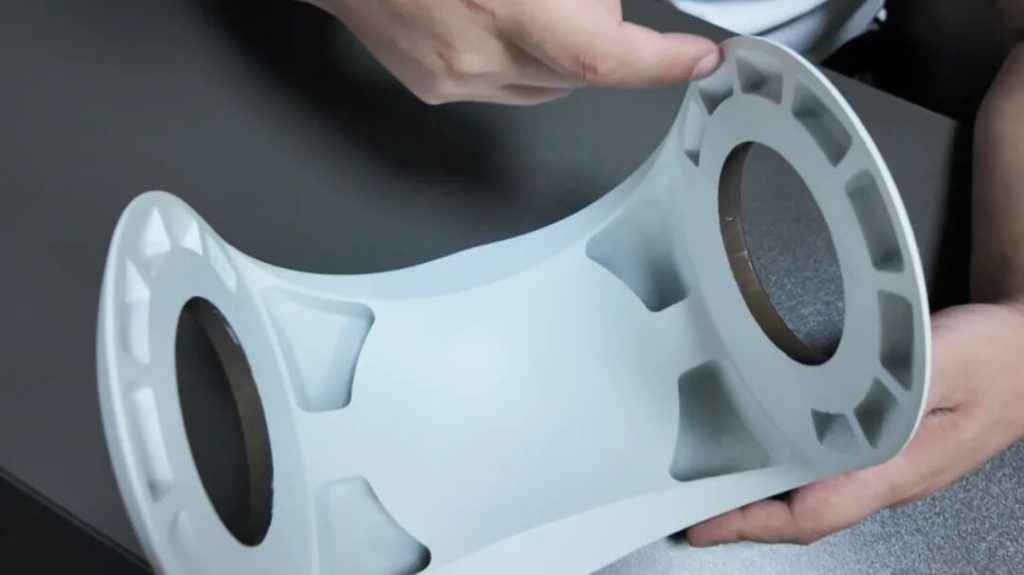
One of the most frequently misunderstood aspects of metal SLM is the difference between a sintered part and a fully melted part. ZRapid iSLM machines produce fully melted, dense metal structures with part density consistently above 99%. This means that the internal metallurgical structure of an iSLM part is comparable to a wrought or cast equivalent — not a porous approximation.
In practice, this translates to tensile strength, yield strength, and fatigue performance that meets or exceeds the requirements of most industrial applications. For engineers specifying metal AM parts for structural use, this density figure is the most important property to understand. It is what separates a functional production part from a prototype-grade component.
Dimensional accuracy across the iSLM fleet is controlled by laser spot size, scanning strategy, and thermal management during the build. For most industrial applications, as-built tolerances are sufficient for non-critical features. For mating surfaces, sealing faces, and precision bores, post-processing brings dimensions into full conformance with engineering drawings. CNC machining or manual polishing are the most common methods.
Why 150 Machines on One Platform
Running a single-platform fleet of 150 machines is a deliberate operational decision, not a coincidence. Several advantages follow directly from this standardization.
Process consistency: Every iSLM machine in our fleet runs the same control software, the same material parameter libraries, and the same preprocessing workflow. Consequently, a part validated on one machine can be reproduced on any other machine of the same model. Variation is minimal. This is critical for production orders where dimensional consistency across multiple builds is a customer requirement.
Flexible capacity allocation: Because all machines share the same software and material compatibility, we can allocate any order to any available machine of the appropriate build volume. Our fleet maintains a machine uptime rate of 95%, which means that at any given time, the vast majority of our 150 machines are available for production. In practical terms, this matters even for small orders: a single-part prototype or a low-volume run does not have to wait in a long queue behind larger jobs. Capacity is almost always available, and scheduling is driven by build time rather than machine backlog. For urgent orders, parallel builds across multiple machines are straightforward to coordinate.
Operator expertise: Training, troubleshooting, and process optimization are all concentrated on a single platform. As a result, our engineering team develops deep, specialized knowledge of iSLM machine behavior. Expertise is not spread thinly across multiple incompatible systems. This accumulated knowledge directly improves first-build success rates and reduces iteration cycles.
Maintenance and spare parts: A standardized fleet simplifies maintenance scheduling, spare parts inventory, and technical support. Downtime for any individual machine is minimized because parts and procedures are interchangeable across the fleet.
What This Means for Your Parts
For engineers submitting metal AM orders to Hyperlab3D, the practical implications of our ZRapid iSLM fleet are straightforward.
Build volume flexibility means we can accommodate parts ranging from small precision components to large structural assemblies. We allocate the appropriate machine size without compromising on quality or process parameters. Material breadth means we can support most common metal AM applications — structural, medical, aerospace, tooling, thermal management — without switching to a different platform or process. Production consistency means that repeat orders produce parts with the same dimensional and mechanical characteristics as the first build. This is essential for assemblies, validation programs, and regulated applications.
Furthermore, the iSLM platform supports unattended 24-hour operation through the Presto SLM control software. This allows us to run continuous production across the fleet, reducing lead times without sacrificing build quality.
Final Thoughts
The quality of a metal 3D-printed part begins with the machine that produces it. At Hyperlab3D, our commitment to the ZRapid iSLM platform reflects a deliberate choice: to build production capability on hardware that combines proven SLM technology, broad material compatibility, and consistent performance across a large standardized fleet. With 150 machines and six model variants in active production, we have the capacity, the process knowledge, and the equipment to support metal AM projects from single prototype to production volume.
If you are evaluating metal 3D printing for a new application and want to understand which materials, build volumes, and tolerances are appropriate for your geometry, contact Hyperlab3D’s engineering team to discuss your project.
Technical specifications sourced from ZRapid Tech official product documentation (zero-tek.com). Machine data current as of June 2026.